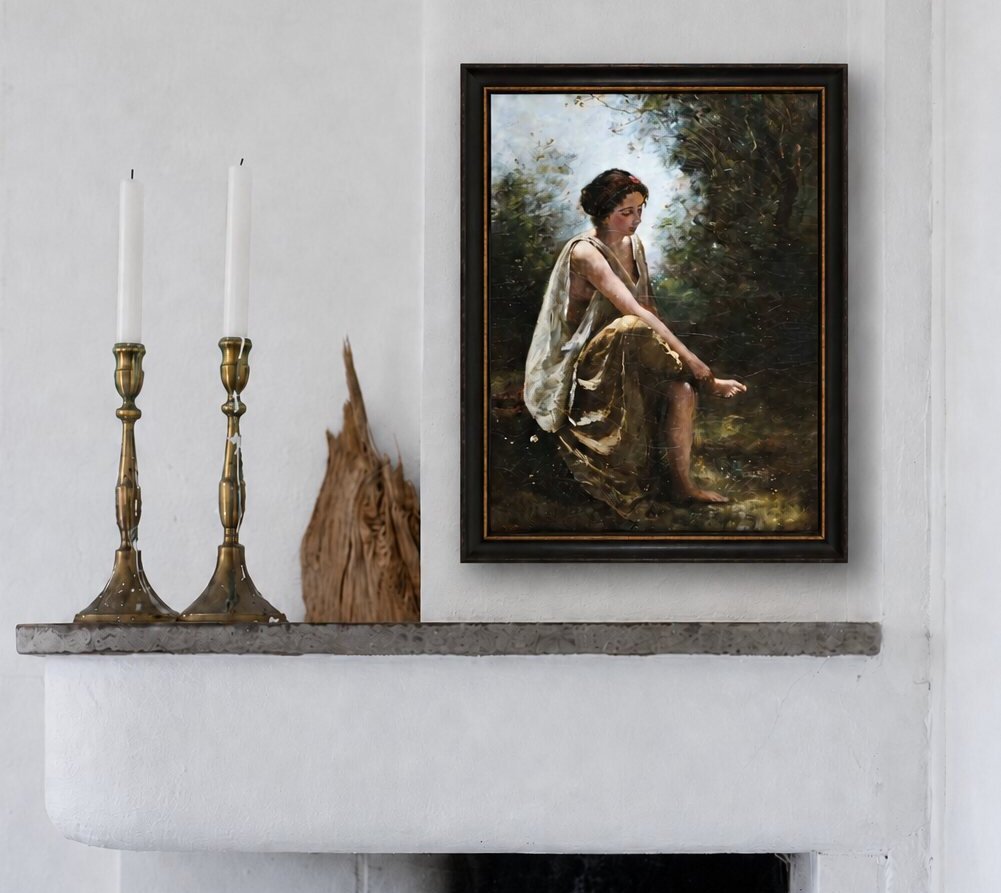
I have been in many homes where everything looked just right. The furniture arrangement, materials, textures and colors were all truly beautiful, the rooms generously filled with light, and each object carefully chosen. Yet, after a few short minutes, my body would inevitably begin to search for somewhere else to be, like a place to land that feels safe and welcoming. Maybe not quite so perfect, but genuinely good. Something less demanding and more giving. That instinctive need of the body to find a safe place to land has always fascinated me. How is it that we can be really impressed by a space and still not feel good there? What’s the difference between a home that looks really good but feels off, and one that actually is good for the people who live there?
A Home Is Not a Still Image
A good interior photograph can be true art, and so can the design behind it. Beautiful colours, textures and proportions, expensive details and unusual ways of styling a room can all be totally captivating and inspiring. I love art and was trained to understand and appreciate it during weekly lessons in art theory in some of the best European museums. I truly do love art, and the creation stories of many stunning works. And yet, our lives are lived in motion. Not a still life or a portrait, not something we stand outside of. Life constantly moves, changes and adjusts, and is felt more in the body than the mind.
This is how we experience a home, too. We enter, move from room to room, turn corners, open doors, cook, sit, sleep, work, withdraw from the world, then come back again. We experience the house as multiple relationships unfolding at the same time: the relationship between us and the space, and the relationships among all parts of the home: the rooms and the distances between them, the sounds that travel, the light constantly changing the space, and countless details lingering at the edge of our awareness. We do not experience the home as a still composition. The eye may appreciate beauty, but the nervous system reads more deeply, and these two ways of perceiving do not always agree.
The place is so beautiful, so why does it feel off? Why am I not at home in my own home? Perhaps because the eye has been fully satisfied, but the body has not been made at home. The visual is only one of the many ways we perceive reality, and the needs of the physical body in a home are much too complex to be satisfied by a picture-perfect image.
A Home is a Relationship
A home is a relationship, and like every relationship, it has to work for those who live there. Visual attraction might draw you to a house, just as attraction to someone’s looks might draw you to a person. But as powerful as looks can be, they do not always make for a good relationship, one that sustains, nourishes and gives back. Human relationships can be difficult and messy; making them work takes real effort. It is worth it when they support us and give us what we need, and it feels like torture when so little comes back from all our efforts. The same is true of a home. Beyond the impressive appearance, what is actually there? What does the home give, and what does it continually take? Does it support those who live there, or does it keep asking for attention?
Our bodies always look for markers of comfort, safety and belonging in any environment; this is biologically built into us. We need to know when we are safe and when we are in danger. We also need clear times and spaces in which to fully recharge, with no demands placed on our attention. When we spend too much time in spaces (or relationships) that have unclear or reversed functions, we begin to feel drained because the constant dissonance exhausts our system. This starts in a subtle way, but the discomfort persists and grows louder in time.
We all need shelter, support, clear orientation and a certain balance between openness and protection. These are universal needs of the human animal. But once the basics are met, things become much more individual. Each of us has deeply personal needs that a home also has to support. One person might feel restored by openness and visual simplicity, while another needs more enclosure and deeper textures. One person might need quiet and solitude, while another is nourished by movement and connection. A home has to work for each particular person, and often for several people whose needs may be quite different.
This is what makes designing a good personal home so complex. There is a quote by Alvar Aalto that I love about it being easier to design an opera house than a private home. I find this so very true. A public space is easier in some ways because it has one, or only a few particular functions to fulfill, while a personal home has to hold an entire life, often several lives, with all their habits, sensitivities, relationships, contradictions and changing needs.
What Makes a Home Work
So what makes a home work, or not work? In my own practice, which is based on classical feng shui, there is a clear order of priorities. The outside comes first, then the structure and floor plan, and only after that the interior design, colours, materials and personal expression. Ancient feng shui masters taught that if a structure is not well positioned or in a good relationship with the land on which it sits, there is little difference interior changes can make. The land and wider surroundings are not simply scenery around the house; they define a fundamental relationship. A well-designed, beautiful interior cannot fully compensate for a house that is poorly placed, overwhelmed by what surrounds it or disconnected from the land. The next priority is the floor plan, the blueprint of all relationships inside a home. Simply stated, the way all parts of the floor plan relate to one another influences the quality of relationships in the home. An intelligently designed floor plan will support healthy relationships, while a difficult or imbalanced one will create tension and conflict.
For example, a bathroom above the bedroom will affect how that bedroom feels. No matter how luxurious or beautifully designed the bedroom might be, it will always feel a little off. These two spaces perform very different functions, with a clear sense of priority between them. When a bathroom is placed above the bedroom, that order is reversed; this will affect the health and relationships of those who sleep there. A laundry room placed between two directly aligned bedrooms, door to door and window to window, will also affect the relationship between the people who occupy those rooms. If they are guest rooms used only occasionally, the effect might not matter, but if these are your children’s rooms, their relationship is bound to become difficult over time.
A house always feels off for a reason, and that reason often lies deeper than what we can see. The floor plan sets the dynamic of the whole space, and no interior design can permanently mask what has already been defined by the floor plan. A beautiful colour, a stunning piece of furniture or expensive materials might soften a problem or direct attention away from it, but they cannot correct a relationship that is fundamentally difficult.
This is why buying a house or undertaking a major home renovation requires great care and thought. It is not simply a matter of choosing the desired look. A renovation is closer to surgery because changing one part of the house affects all relationships within it. Moving a wall, relocating a bathroom, opening up a kitchen or changing an entrance influences the way the whole house functions.
A Home Has to Fit
Only after the relationship to the land and the inner structure of the house have been examined (and corrected when needed) do we come to its interior design. Colours, materials, furnishings, and the overall look and atmosphere matter greatly, but they work well only when the foundation is sound. At this stage the needs of each person become very important. In classical feng shui, each person has what is often called a personal birth element, which helps understand some of the elemental qualities a person needs from their physical environment. The Five Elements theory is complex, and I have written about it here, but one of its most important insights is simple: a home has to fit those who live there.
What supports one person may drain another. What feels peaceful and spacious to you may feel empty or exposed to someone else. A strong colour or elemental quality may nourish one member of a family and completely overwhelm another. When several people live together, their needs may not be the same. This makes creating a good home more complex, but also more honest.
A home is not one-size-fits-all beauty. It has to fit the person, much like well-made clothing. If I were to follow every latest fashion simply because it was beautiful or current, I might look completely ridiculous; some shapes and colours do not suit my body at all. Or you might think I looked perfectly fashionable while I quietly suffered inside, not feeling like myself. The clothing could be beautiful and well made, and still feel completely wrong on my body.
The same exact mismatch can happen in a home. It can be fashionable, expensive and admired, yet feel off to those who live there. The colour of the year does not automatically become the colour that nourishes you. A room that looks powerful and dramatic may quietly exhaust the person who spends time in it. A sparse interior may look calm and soothing but feel cold and empty to someone who needs warmth, memory and aged textures.
I love the wisdom of traditional Balinese architecture, where homes were built to the measurements of the person who would live there. This literally made each home fit the person. We may not build our homes according to literal body measurements, but the deeper wisdom here is important: a home should fit and support the person living there, not ask the person to fit an idea of a home.
It Can Impress Others, but Belonging Comes First
There is nothing wrong with wanting a home to impress others. We have always had this desire; throughout history, it has been natural and, in many homes, necessary. There are spaces in a home where beauty needs to express status. The problem begins when this need to impress extends into each and every part of the house. If the bedroom performs, the kitchen performs and every private space performs also, the person living there will inevitably feel like a guest. With every object asking to be noticed and appreciated, every surface needing to remain undisturbed and every room looking prepared for someone else’s arrival, there is no place to go to stop pretending, nowhere the body can simply land.
I do not mean that private spaces have to be careless or unattractive; this is not what I mean. If anything, private spaces need way more care and intelligence in their design because they have to restore those who use them by supporting rest, intimacy and the ability to return to oneself. This is not an easy task, and in many ways it is much harder than creating the public face of a house. A home surely can remain beautiful and impressive while still meeting the deeply private needs of those who live there. It can still help the body feel at home. Because even the strongest among us need a place to belong.
Rodika Tchi works with private clients worldwide to create homes that support health, relationships and daily life. She is the author of two published books and has been interviewed by Psychology Today, Business Insider and Elle Décor.
More about Rodika
A home begins to feel like a stranger when its beauty belongs to others.
Published
August 6, 2026
Share
Author
Rodika Tchi


